
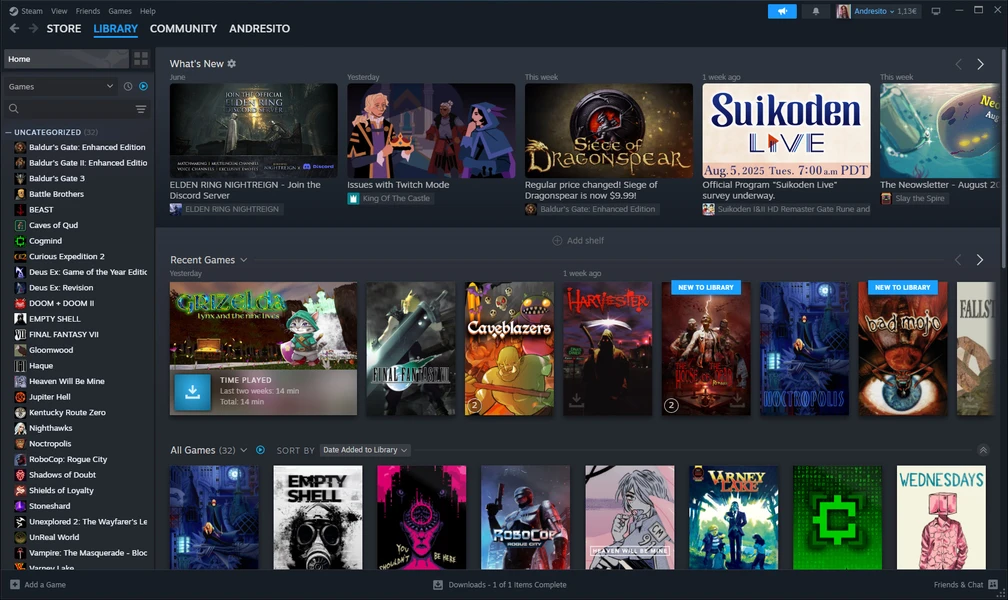


Steam is the world’s largest digital distribution platform for PC video games, created and operated by Valve Corporation. Although it is now known as a «video game store,» it began as a technical tool to facilitate updates and combat piracy.
Foundation and Origins
Steam was officially launched on September 12, 2003, when Valve Corporation opened the platform to the public. However, its roots go further back, to the founding of Valve itself.
Valve Corporation was founded in August 1996 by two former Microsoft employees: Gabe Newell and Mike Harrington. Both worked at Microsoft and decided to leave the company to create their own video game development studio. To finance Valve and the development of their first game, Half-Life, they invested more than 20 million dollars of their own savings.
Half-Life was released in 1998 and was an immediate success, establishing Valve as a major developer in the industry.
(adsbygoogle = window.adsbygoogle || []).push({});
The Idea Behind Steam
The idea for Steam came from a personal experience by Gabe Newell. When trying to upload games to the internet, he encountered problems efficiently distributing updates and patches. This led him to develop a platform that could:
-
Update games automatically without user intervention
-
Facilitate the distribution of patches and bug fixes
-
Combat piracy and online cheating
-
Manage multiplayer servers in a centralized way
In 2000, Mike Harrington left Valve, leaving Gabe Newell as the sole leader of the company. From that moment on, Newell focused on developing Steam as a priority project.
Evolution of the Platform
Steam began as a technical utility but quickly evolved:
-
2003: Initial launch as an update tool
-
2004: With the release of Half-Life 2, Steam became mandatory to play, which generated controversy but also established its importance
-
Following years: It transformed into a complete digital store, adding social features, achievements, community, and eventually becoming the largest video game library in history.
Today, Steam maintains approximately 75% of the market share in digital distribution of PC video games.
Members and Current Structure
Gabe Newell remains the main figure at Valve Corporation and Steam. With an estimated fortune of 11 billion dollars, he is one of the most influential figures in the video game industry.
Valve operates with an unconventional organizational structure:
-
No traditional hierarchies: Valve is known for its «flat» structure, where employees choose which projects to work on
-
Private ownership: The company has no external shareholders and has never been bought by other companies, maintaining total independence
-
Focus on innovation: In addition to Steam, Valve has created iconic games like Counter-Strike, Portal, Dota 2, Left 4 Dead,d and more
Impact on the Industry
Steam revolutionized the way players buy and consume video games:
-
Digital distribution: Eliminated the need for physical discs for PC
-
Access to indie games: Allowed independent developers to reach global audiences
-
Sales and discounts: The famous «Steam Sales» changed price expectations in the industry
-
Community and social features: Integrated forums, reviews, guides, live streaming, ng and more
Additional Facts
-
Steam celebrates its anniversary every September 12 (launched in 2003)
-
The platform is over 20 years old (it turned two decades old in 2023-2024)
-
Valve has also ventured into hardware with products like Steam Deck (portable console), Steam Controller, and virtual reality technology


Amazing